On October 7, 2023, a man walked into a Pennsylvania store with eight skill game vouchers. Each one claimed a $500 win, so the whole stack came to $4,000. The clerk took a quick look, thought it was all good, and paid him. Later the slips were checked by the route firm, and every one was fake, as Gambling News reported. By then, sad to say, the cash was long gone and so was he.
That story shows how skill game ticket fraud works, and it's not rocket science. A crook just needs one tired clerk and one quick look at a slip of paper. This guide shows you how fake tickets get made, how to spot them, and how to stop them in their tracks before a single dollar leaves your drawer, which is the part that really counts at the end of the day.
Why Fake Skill Game Tickets Are a Real Risk?
A skill game ticket scam can be pulled off with a home printer and a slip that looks right at first glance. The weak spot is the counter, where a busy clerk swaps tickets for cash and often has to move fast. Two cases reported in Pennsylvania show how much one bad payout can cost a store or a route.
What Fraudsters Do With Fake Skill Game Tickets
When a player cashes out, the machine prints a ticket with the win on it. Then a clerk or a kiosk swaps that ticket for cash at the counter. Crooks go after that last step, since that's where the money is. They make a slip that looks real, or they tweak a real one, and cross their fingers. Most of the time the fake is only caught days later, when the route firm counts the slips. No one has to break into a machine to pull this off, so it can fly under the radar.
Real Cases Reported in Pennsylvania Stores
Two news stories from Pennsylvania show how this plays out in real life. In the 2023 case, the police pulled the store video and asked the public to help name the man, as Gambling News reported. Then in May 2024, Casino.org reported that a man had been charged with faking skill game vouchers and sending other people to cash them at gas stations and corner stores across the state. Prosecutors say the group made off with more than $20,000 in all. They also say over 100 fake vouchers were found on his laptop, with watermarks copied from several game makers. Keep in mind these are only charges, and the story does not say how it ended.
What One Bad Payout Costs a Store or Route
The lost cash is the first blow, and eight $500 slips add up to a big chunk of change. Then come the small costs that sneak up on you over the next few days. Someone has to write the report, pull the camera clip, call the route firm, and fill out forms, and all of that takes time away from a busy shift. The store and the route firm may not see eye to eye on who pays for the loss. Who pays is spelled out in your deal, so read your contract now and not after.
4 Common Types of Ticket and Voucher Fraud
Fake redemption tickets and forged skill game vouchers usually fall into one of four buckets. Each one needs its own game plan, because a check that catches a printed fake can miss a slip that was already paid. Once your staff know which kind they're facing, they can respond fast and keep the cash where it belongs.
1. Forged Vouchers Made With Printers or Chemicals
In the 2024 case, prosecutors say the man used printers and chemicals to change vouchers. They say he also bumped up the prize amounts so each slip paid out more. A fully fake slip can be made the same way, with a laptop and a good printer. At first glance it may look just fine, and that's the whole trick in a nutshell.
2. Altered Amounts on Real Tickets From Machines
Some scams start with a real ticket that only shows a small win on it. The crook changes the numbers, so a few bucks turns into a big payday. If your staff only check the amount against what they expect, a good fake can slip right through the cracks.
3. Duplicate or Reused Tickets Presented Twice
A ticket that was already paid can be shown again to a new clerk or kiosk. The crook just hopes nobody notices that the same slip got cashed before. A system that marks each slip as paid is the simplest form of duplicate redemption ticket prevention, and it puts a stop to this right away. Our kiosks mark each ticket as paid, so it can't be cashed twice, plain and simple.
4. Pressure Tactics Used on Cashiers at the Counter
Fake slips often show up with a big dose of pressure at the counter. A gaming board in Victoria, Australia warned venues about a player who pushed staff to pay tickets without proper checks, as the VGCCC alert explains. A long line, a loud voice, or an angry "hurry up" can make a sloppy payout feel like the easy way out. Your clerks need to know the boss has their back when this happens.
How to Spot a Fake Ticket Before You Pay?
Knowing how to spot fake tickets starts with a quick look at the paper and ends with a scan. A visual check can catch a sloppy forgery, but a careful one only shows up when the ticket is scanned by a kiosk or an app.
Quick Visual Checks Staff Can Do in Seconds
These tips are a good start, but none of them can prove a ticket is real. Think of them as a quick once-over that takes just a few seconds.
- Hold the slip next to a ticket from your own machines and compare the paper and print.
- Look for blurry print, odd fonts, or smudges near the numbers.
- Check that the amount, date and time make sense for that machine.
- Watch for a slip that looks folded, rubbed, or changed around the amount.
- Pay attention when the person seems to be in a big rush to get paid.
Why Looking at the Paper Alone Is Not Enough?
In the 2024 case, prosecutors say the fake files had watermarks copied from game makers. So the slips looked like the real deal, even to people who see them every day. That means a ticket can pass the eye test and still be a fake. In the 2023 case, the fakes were only spotted when the route firm took a closer look. Your eyes make a good first filter, but they should never get the last word.
Scan Every Ticket Before Any Cash Leaves
The advice from the Victoria board is short and sweet: scan or check every ticket before you pay. It also says owners should stand behind any clerk who refuses an unchecked slip, even when a customer gets pushy. Put that rule on a sign by the register so nobody forgets it on a busy night: no scan, no cash.
5 Layered Controls That Stop Ticket Fraud
No one tool stops every scam, so it pays to stack a few layers together. That way a crook has to beat every layer, and that's a tall order. Below is how our own tools handle it, and if you use another vendor, ask them to walk you through their system.
1. Encrypted Tickets and Kiosk Checks Explained
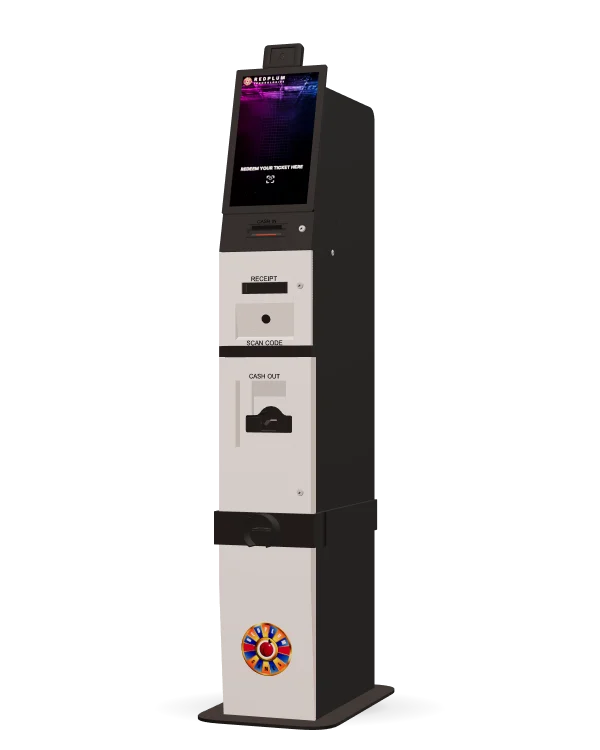
Our cabinets print encrypted QR tickets, and our kiosks check each one first. The kiosk looks to see if the ticket is real and unpaid before any cash comes out. Once a ticket is paid, it gets marked, so a reused ticket at the kiosk is refused on the spot, and so is a bad slip. You can get the full rundown on the ticket redemption kiosks page if you want more. Since the redemption kiosk ticket check happens inside the machine, it doesn't matter how worn out your clerk is after a long shift.
2. Camera Images That Back Up a Disputed Payout
Our kiosks have a built-in HD webcam that snaps a photo at every payout. That gives you something to fall back on when a customer says they never got paid. It also comes in handy if you need to show who was standing at the machine. Ask your route firm how long those photos should be kept, since the rules can differ.
3. Phone Validation for Stores Without a Kiosk
Not every store has a kiosk, and that's totally fine for a lot of small shops. The free RedPlum Validator app lets staff scan the machine's encrypted QR tickets with an Android phone. The app then shows whether the slip is real and still unpaid. It doesn't pay out cash, so think of it as a check and not a stand-in for a kiosk. As a rule of thumb, have a manager scan the slip before any cash leaves the drawer.
4. Access Logs, Locks, and Role-Based Permissions
Fraud doesn't always walk in from the street, and sometimes it's an inside job. Our E450 and EX450 kiosks have a 5 mm safe door with an electronic lock, and our F600 models use a safe belt with a padlock. On the software side, RedPlum Connect offers role-based access, so each person only sees what their job calls for. Our kiosk maintenance post also suggests keeping the cash vault locked between shifts, with keys held by people you trust.
5. Daily Reports That Flag Odd Payout Patterns
Numbers can tip you off that something smells fishy before anyone on your team does. RedPlum Live shows the cash left, refills due, last batch closed and tickets cashed for each kiosk. If one kiosk runs out of cash faster than the rest, that's a red flag worth checking. The reporting side is covered in our RedPlum Connect post, if you want more detail.
What Cashiers Should Do When a Ticket Looks Wrong?
Even with good controls in place, a clerk will sometimes face a fake ticket at the counter, or an upset customer whose fake ticket at a kiosk was turned away. Having a script and a set of steps ready ahead of time keeps that moment calm and keeps the cash in the drawer.
A Simple Script for Pressure at the Counter
Give your clerks the words before their first shift, so they don't make them up on the fly. It's hard to think straight when someone is breathing down your neck at the counter. Here are three short lines your staff can use when it happens:
- "I need to scan this first. It only takes a moment."
- "I can't pay until it scans. That's the rule here."
- "Let me grab my manager to help sort this out."
Say them calmly, and say them again if you have to, because nobody wins a shouting match. Keeping your cool keeps the line moving and keeps your staff out of harm's way.
Steps to Follow if a Ticket Fails the Check
- Don't pay, because a failed check means no cash, even if the person swears it's a mistake.
- Stay calm and polite, and ask the person to hang tight while you get a manager.
- Write down the time, the amount, the ticket number, and the machine it came from.
- Call your route firm or machine maker and tell them exactly what happened.
- Save the camera clip or kiosk photo from that exact time.
- If anyone threatens you or your staff, put safety first and call the police.
The Victoria alert follows the same idea, so a failed ticket means no payout, and the provider should be called if more checks are needed. It's a simple routine that keeps everyone on the same page when things go sideways.
Staff Training and a Store Checklist
Good training is what stops a forged voucher cash out on a busy night when nobody is watching the cameras. A short plan for new hires, a checklist for every shift, a record-keeping habit and a quarterly review keep everyone on the same page.
A Five-Minute Training Plan for New Cashiers
A five-minute session is easy to repeat for every new hire, and it beats learning the hard way. Skill game cashier training doesn't need slides or a classroom, just a real ticket and a few spare minutes before the shift kicks off, which most shops can find even on their busiest days of the week.
| Minute | What to cover |
|---|---|
| 1 | Show a real ticket from your own machine and point out how it looks. |
| 2 | Explain the rule: no scan, no cash. |
| 3 | Practice the three lines out loud. |
| 4 | Walk through the steps for a ticket that fails. |
| 5 | Show who to call and where the notes are kept. |
Opening and Closing Checks for Each Shift
A few quick checks at each shift change keep small problems from snowballing. Think of this as your staff checklist for ticket redemption, and tape a copy near the register. That way it stays in plain sight, and nobody can say they forgot.
- Make sure the scanner, kiosk, or Validator phone is charged and working.
- Check the kiosk's cash level and refill status.
- Confirm the cameras are on and recording.
- Compare the number of tickets cashed with your report.
- Leave a short note about anything odd for the next shift.
What to Keep for Police and Your Route Firm
If something goes wrong, a good paper trail saves everyone a ton of time. Keep these items in one folder, so they can be pulled up fast when someone asks:
- Photos of the ticket, if you still have it
- The date, time and amount
- The ticket number and machine ID
- Camera clips or kiosk payout photos
- The names of the staff on duty
- A police report number, if you filed one
Reviewing Your Fraud Controls Every Quarter
Once every three months, grab a pen and ask yourself a few plain questions. Did any ticket fail a check, and does every clerk still know the lines by heart? Are camera photos still being saved, and do only the right people have keys? Do your reports show anything odd that's worth a second look this time around? It takes about half an hour, and it catches small slips before they cost you an arm and a leg.
Fraud Controls Compared at a Glance
Here's how the main tools stack up side by side, and each one covers a gap the others leave wide open.
| Control | What it helps stop | Who handles it | What it needs |
|---|---|---|---|
| Scan before paying | Forged and altered tickets | Cashier | A scanner, kiosk or phone app |
| Kiosk ticket check | Reused and invalid tickets | The machine | A redemption kiosk |
| Phone validation | Fakes at stores with no kiosk | Cashier or manager | An Android phone with the app |
| Payout camera image | Disputes over payouts | The machine | A kiosk with a webcam |
| Locks and role-based access | Misuse by insiders | Owner or manager | Locks and software permissions |
| Daily reports | Odd payout patterns | Back office | Reporting software |
| Staff script | Pressure at the counter | Cashier | A little training |
Conclusion
Skill game ticket fraud usually comes down to one weak moment, and that's a payout made too fast. You can close that gap with three simple habits that won't break the bank. Scan every ticket before cash leaves, add layers like kiosk checks, camera photos and daily reports, and train every clerk to say no calmly with a smile.
If you want help picking the right setup for your store, talk to the RedPlum team and tell us how many machines you run. We'll take it from there and help you find a setup that fits your shop like a glove.
FAQs: Common Questions About Ticket Fraud
What is skill game ticket fraud?
It's when someone cashes a fake, changed, or already-paid skill game ticket to get money they never won. In plain English, it's someone trying to pull a fast one at the counter for a win that never happened.
How do fake skill game vouchers get made?
In the 2024 case, prosecutors say the man used printers and chemicals to change vouchers and raise the amounts. Fully fake ones can be whipped up from a file on a home computer, believe it or not.
How can a cashier tell if a skill game ticket is fake?
Look closely at the paper and print, but don't stop there and call it a day. Scan every ticket before you pay, because a good fake can look just like the real thing.
Can a redemption kiosk spot a forged ticket?
Our kiosks check each encrypted ticket and turn away any slip that's reused or invalid. Other kiosks vary, so ask your vendor to spell out how theirs works.
What should I do if a customer presents a fake ticket?
Don't pay, keep your cool, grab a manager, and write down the details right away. Then call your route firm, save the camera record, and call the police if anyone gets out of hand.
Who is responsible when a fake ticket is paid out?
That depends on your deal with your route firm and on the rules where you live. Read the fine print in your contract now, and ask a lawyer if anything seems fuzzy.
How do I stop duplicate tickets from being cashed twice?
Use a system that marks each ticket as paid the moment it's cashed at the counter or kiosk. That way, if someone tries the same slip twice, it gets turned away on the spot.
Do I need a kiosk to validate skill game tickets?
Not always, since a phone app like RedPlum Validator can check tickets right at the counter. Just keep in mind that the app checks tickets, but it won't cough up any cash.
How do I train staff to handle ticket fraud?
Keep it short: show a real ticket, teach the scan rule, practice the lines, and go over the steps for a failed ticket. Repeat the same quick session for every new hire, so nobody slips through the cracks.
Should I report a forged skill game voucher to the police?
If you think a ticket was forged, tell your route firm and ask them or a lawyer how it should be reported. If anyone threatens your staff, don't sit on your hands, and call the police right away.
Related product
Ticket redemption kiosks
Every RedPlum kiosk reads the ticket a skill game machine prints, checks it hasn't been paid, and dispenses the cash with no staff involved.
Explore ticket redemption kiosks