What Makes Casey's a Business Model Worth Studying
Casey's General Stores is often discussed when people talk about strong retail models. The reason is simple. It turned a basic convenience store into a daily food destination. That shift changed everything. Customers now visit more often, stay longer, and spend more during each visit. That's a big deal, right?
From Gas Station To Food Destination
Casey's did not stay limited to fuel and packaged goods. It built a strong identity around pizza. Fresh, hot, and ready food became the main attraction.
- Pizza created a reason to visit daily
Customers now walk into the store with a clear purpose, which is to grab fresh food instead of just making a quick stop for fuel or snacks. This shift increased the number of intentional visits and made the store part of daily routines. - Customers began treating stores like quick food stops
Instead of viewing the store as a pass-through location, people started seeing it as a place where they could grab a proper meal. This changed how long they stayed and how they interacted with the space. - Time spent inside increased naturally
Food orders take time, and that waiting period keeps customers inside longer. This extra time creates more chances for additional purchases and engagement.
This is the foundation of the Casey's General Store business strategy. Food drives behavior. Behavior drives revenue.
How Food Drives Repeat Foot Traffic Daily
Food creates habits. People return again and again because eating is part of their routine. You see the same customers at similar times every day. That kind of repeat behavior is valuable.
- Morning coffee and breakfast runs
Customers start their day with quick stops for coffee or breakfast items, which builds a daily habit loop and ensures steady early traffic. - Lunch visits during work hours
Many customers return during lunch breaks, creating a second wave of consistent foot traffic that keeps the store active throughout the day. - Evening or late-night food stops
Dinner and late-night cravings bring customers back again, increasing total daily visits and strengthening repeat patterns.
This pattern supports the Casey's pizza foot traffic business model explained in simple terms. When people visit often, you get more chances to earn from them. Add gaming, and those chances increase even more. Makes sense, right?
Community Presence In Small-Town Markets
Casey's performs well in smaller towns and suburban areas. These locations often have fewer entertainment options. That makes in-store experiences more valuable.
- Customers know the brand personally
Regular visitors recognize the store, staff, and setup, which creates a sense of familiarity and comfort. - Trust builds over time
Consistent service and local presence help build strong trust, making customers more likely to stay longer and spend more. - Visits are frequent and predictable
Local customers include the store in their daily routine, leading to steady and reliable foot traffic.
For gaming, this is a strong advantage. People are more comfortable playing in familiar places. That comfort leads to longer engagement. Not complicated, just human behavior.
How the Pizza & Play Formula Works?
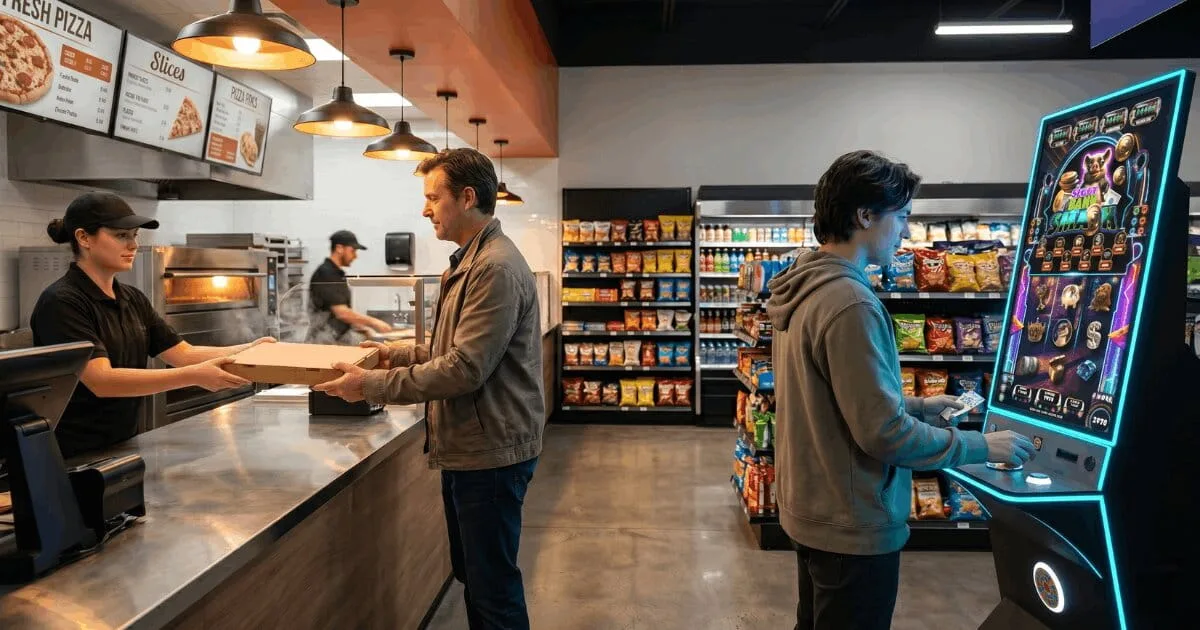
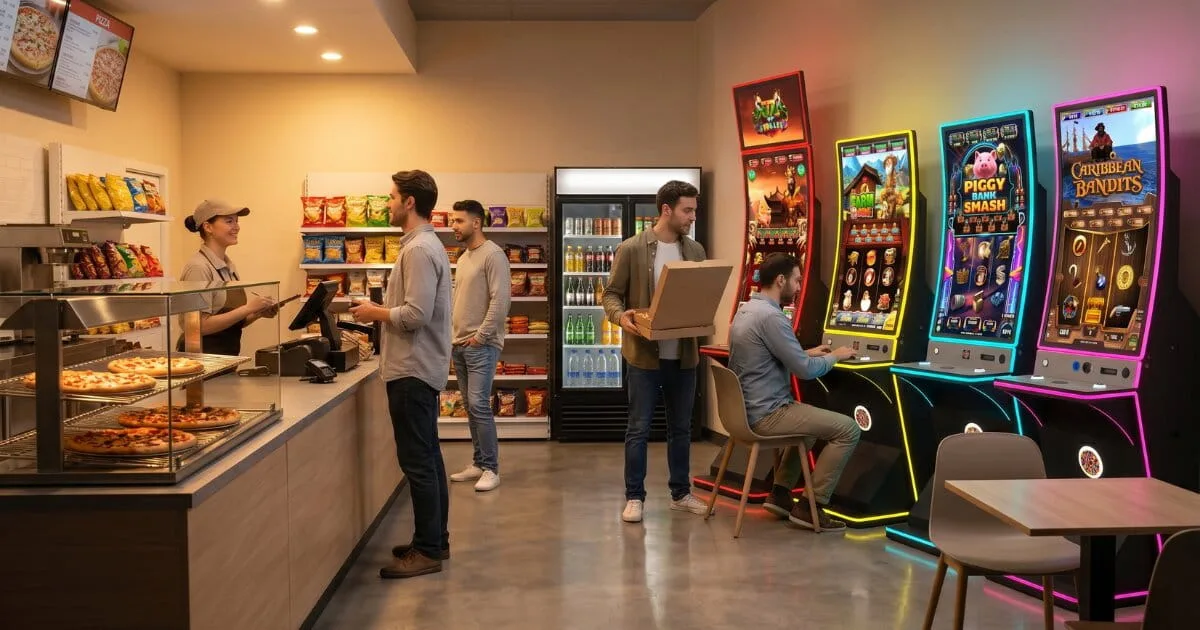
The Pizza & Play formula is built on a simple structure. Food brings customers in. Gaming keeps them there. Both together increase spending. That's the loop. It runs quietly in the background and keeps generating income. Pretty smart when you think about it.
Food + Entertainment = Longer Dwell Time
When customers order food, they wait. That waiting time can either be wasted or used. Skill games turn that idle time into activity.
- Customers stay engaged while waiting:
Instead of standing idle or checking their phones, customers interact with games, making the waiting experience more enjoyable. - Time inside the store increases:
Engagement naturally extends the duration of visits, giving customers more time to explore and spend. - Spending often rises during longer visits:
The longer customers stay, the more likely they are to make additional purchases beyond their original order.
This is why the food and gaming combo business works so well. It does not interrupt the customer journey. It fits right into it.
Passive Revenue Layered On Top Of Food Sales
Food requires effort. Staff, ingredients, preparation. Gaming works differently. Once installed, it runs with minimal involvement.
- Machines operate independently:
Skill games function without constant supervision, allowing them to generate income without active management. - Revenue builds without constant input:
Once set up, machines continue earning throughout the day without needing additional resources. - No extra workload for staff:
Employees can focus on core tasks while gaming operates in the background.
This is why many operators are looking into skill gaming machines for C-stores. It adds income without adding stress. That's a win, plain and simple.
Low Complexity, High ROI For Operators
Operators prefer systems that are easy to manage. Skill gaming fits that need.
- Simple installation:
Machines can be set up quickly without major changes to the store layout. - Minimal training required:
Staff do not need extensive training to manage or support the machines. - Predictable performance:
Consistent usage patterns lead to stable and reliable income over time.
For many store owners, this becomes one of the easiest passive income ideas for bar and restaurant owners. It just sits there and earns. Not bad at all.
Why Skill Gaming Fits the C-Store Model Perfectly
C-Stores Already Own The Foot Traffic
Customers visit convenience stores daily. Fuel, snacks, drinks, and food bring them in regularly.
- High visit frequency:
Customers come in multiple times a week, sometimes even daily, creating a steady stream of opportunities to generate additional revenue. - Repeat customers:
A large portion of visitors are regulars who feel comfortable in the store, making them more likely to engage with new offerings like gaming. - Strong local presence:
Stores are deeply connected to their communities, which builds trust and encourages longer visits and higher engagement.
This makes a foot traffic monetization strategy very effective. You are not chasing new customers. You are earning more from the ones you already have. Simple logic.
Dead Floor Space Turned Into Revenue
- Space that sits idle:
Empty corners and unused areas often go unnoticed but represent lost earning potential. - Areas that bring low returns:
Some sections generate minimal revenue compared to their occupied space. - Sections that can be optimized:
With small adjustments, these areas can be turned into productive zones.
Adding skill game cabinets for convenience stores turns those areas into income sources. One cabinet can outperform multiple shelves. That's a solid upgrade.
Skill Games Attract A Broader Customer Base
- Simple gameplay:
Most games are easy to understand and allow customers to start playing without prior experience or assistance. - Quick learning curve:
Players quickly become comfortable, which encourages repeat engagement during future visits. - Wider audience appeal:
Different types of customers can enjoy the games, increasing overall participation and usage.
This makes skill games for restaurants and bars suitable for different types of customers. Not just one group. That diversity helps increase engagement.
What Skill Gaming Operators Can Learn from Casey's
Casey's General Stores built success through consistency and local trust. These same ideas apply directly to skill gaming. Keep things simple, keep them reliable, and customers will return. Works more often than not.
Build Loyalty Around Experience, Not Just Product
Customers return for the overall experience, not just the product.
- Comfortable environment:
A clean, well-lit, and relaxed store layout makes customers feel at ease. When people feel comfortable, they naturally spend more time inside, which increases the chances of engagement with gaming. - Familiar setup:
When the store layout, machine placement, and overall experience stay consistent, customers know what to expect. This familiarity reduces hesitation and makes repeat interaction more likely. - Easy interaction:
Systems that are simple to use encourage more participation. If customers can quickly understand how something works, they are more likely to try it and come back to it later.
Gaming can follow the same idea. Make it easy and enjoyable. Customers will keep coming back. That's how loyalty grows.
Consistency And Simplicity Drive Revenue
Consistency builds trust. When customers know what to expect, they feel more comfortable engaging.
- Same experience every visit:
Providing a stable and predictable setup ensures customers feel confident returning and interacting again. - No confusion or complexity:
Clear, simple systems remove barriers and make it easier for customers to participate without second thoughts. - Reliable outcomes:
When machines perform consistently, customers trust the experience and are more likely to keep playing.
This helps build repeat play. And repeat play means steady income. Pretty straightforward.
Community-Rooted Locations Outperform Big-Box Rivals
Local stores have stronger relationships with customers.
- Personal connections:
Staff often recognize customers, which builds familiarity and comfort within the store environment. - Higher trust levels:
Customers feel safer and more relaxed in places they trust, making them more open to spending time and money. - Frequent visits:
Community-based locations see repeat visits throughout the week, creating more opportunities for engagement.
In gaming, this trust matters a lot. People play more where they feel at ease. That's just how it works.
The Numbers Behind the Pizza & Play Strategy
The strategy works because the numbers support it. More time spent inside leads to more spending. More engagement leads to repeat visits. It builds over time and creates steady growth. Nothing complicated, just solid math.
Skill Gaming Market Growth Through 2032
The skill gaming industry continues to grow steadily.
- Increasing adoption across locations:
More businesses are adding gaming as an additional revenue stream. - Expanding acceptance:
Customers are becoming more comfortable with skill-based gaming in everyday locations. - Strong long-term demand:
The market shows steady growth, making it a viable long-term investment.
This supports setups like video gaming terminals for bars and retail stores.
Revenue Per Square Foot: Gaming Vs. Shelf Space
Not all space generates equal income.
- Shelves have limited earning potential:
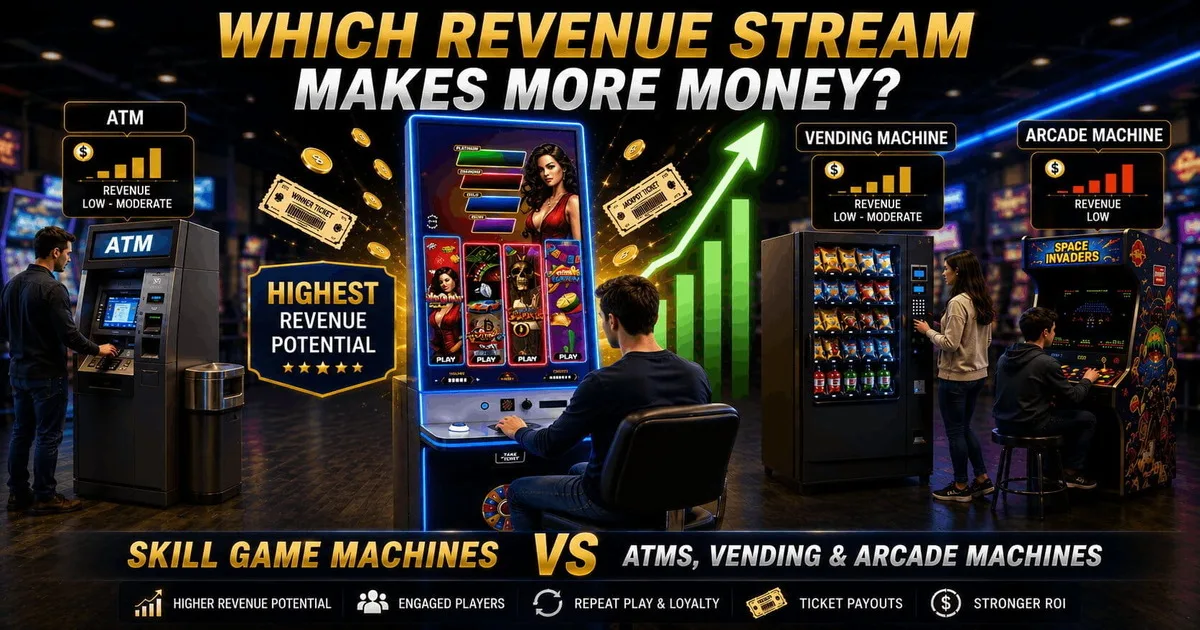
Traditional retail shelves generate small margins based on product sales. - Gaming cabinets produce higher returns:
A single cabinet can generate more revenue than multiple shelves combined. - Space is used more efficiently:
Optimizing floor space increases overall store profitability.
This is key for those asking how to increase convenience store revenue with gaming. It is about smarter use of space.
How Dwell Time Directly Impacts Total Spend
Time inside the store directly affects spending.
- Longer visits lead to more purchases:
Customers who stay longer are more likely to buy additional items. - Engagement increases order value:
Interactive activities encourage spending beyond the initial purchase. - Repeat visits grow over time:
Positive experiences bring customers back more often.
This answers questions like how much do skill gaming machines make per month and how to add skill gaming machines to a restaurant. The more time customers spend, the higher the earning potential. Simple connection.
How To Implement This Model At Your Location
You do not need a major redesign to apply this model. Small adjustments can create big changes. Use your existing setup and add one more layer of engagement. That's the idea. Keep it simple and practical.
Choosing The Right Space And Cabinet Size
Start by identifying high-impact areas.
- Waiting zones:
Customers already spend time here, making it an ideal spot for engagement. - Near checkout counters:
High visibility increases interaction and usage. - Seating areas:
Customers relaxing or waiting are more likely to try gaming.
Choose cabinet size based on available space. Both compact and larger setups can work effectively.
Combining Food Service With Gaming For Max Impact
Placement plays a big role in success.
- Position machines where customers wait:
This captures attention during idle time. - Keep them visible and accessible:
Easy access encourages spontaneous play. - Encourage casual play during idle time:
Customers are more likely to engage when it feels natural and optional.
This works well for those asking can pizza shops host skill gaming machines. Yes, they can, and it fits naturally into their setup.
Final Thoughts on the Pizza & Play Opportunity
Casey's General Stores shows how a simple idea can scale. Food brings people in daily. Adding engagement keeps them inside longer. That combination increases revenue without changing the core business.
The Casey's pizza foot traffic business model explained comes down to a few key points:
- Build repeat visits through food:
Daily food habits bring consistent traffic into the store. - Increase time spent inside:
Engagement keeps customers around longer, increasing opportunities to spend. - Add new ways to spend:
Gaming introduces an additional revenue stream without replacing existing ones.
For operators looking for passive income ideas for bar and restaurant owners, this model offers a clear path. Add gaming, use your existing traffic, and let it generate income alongside your main business. Not flashy, but it works consistently.
RedPlum Games focuses on making skill gaming easy for operators. Their systems are designed for real-world use in busy environments. No unnecessary complications. Just practical solutions.
Related product
Solaris Game Cabinets
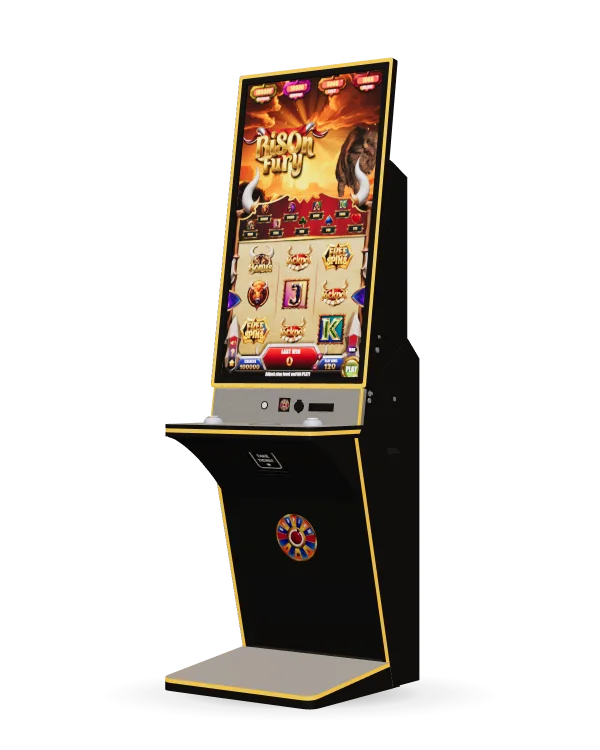
A 43-inch touchscreen in a cold-rolled steel body, with a curved, flat or J-panel display. Every cabinet runs the RedPlum game library and prints encrypted tickets your kiosks pay out.
Explore skill game cabinets