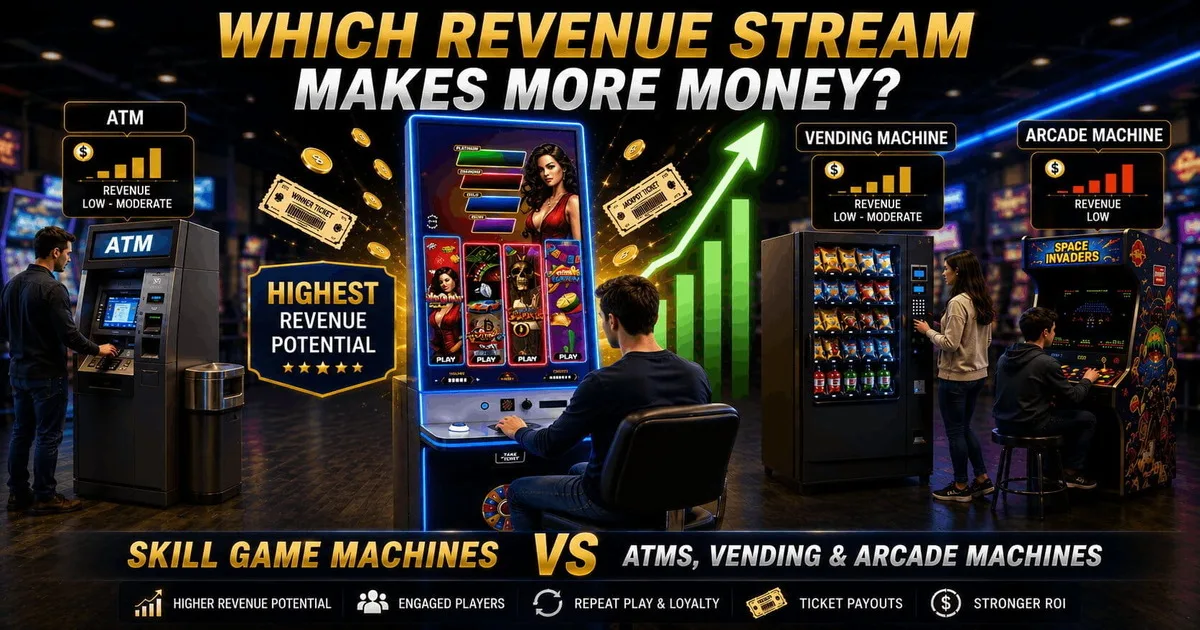
Skill game machines are one of the most popular passive revenue streams for small business owners looking to increase income without adding significant overhead. Compared to lottery commissions, ATMs, and vending machines, a single skill game terminal can generate more income per square foot with very little staff work or daily effort. That's why many store owners now rely on them as a core income source.
4 Common Revenue Streams for Store Owners
Most businesses don't depend on one income stream. They mix things up. Some rely on product sales. Others add machines or services. It's all about making more from the same space.
These store revenue ideas for small business owners include ATMs, vending, lottery, and arcade setups. Some are passive, some need effort. Some pay well, some don't. Let's go through them one by one.
1. Lottery Ticket Sales
- A small commission is earned on each ticket, so profit depends on how many tickets are sold daily
- Retailers typically earn a 5 to 8% commission per ticket sold, depending on the state program. Most base rates fall in the 5 to 6% range, with bonus tiers up to 7 to 8% for high-volume sellers. Profit depends heavily on volume.
- Staff time is required at the counter, and this can slow down service during peak hours
- POS integration is needed, and it may require setup and basic maintenance from time to time
It works, no doubt. Still, the returns stay small unless volume is high. Compared to skill game machine profit, it feels a bit slow, honestly.
2. ATM Machines
- Revenue comes from per-transaction surcharge fees: the U.S. average ATM operator surcharge is $3.22 per withdrawal, according to Bankrate's most recent checking account and ATM fee study
- Monthly revenue is usually depending on location traffic
- Very little staff effort is needed, and most work is handled automatically
- Best results are seen in places where cash use is still common among customers
ATMs are simple and steady. Set it and let it run, right? Still, this location-based revenue stream has a cap, and growth can feel limited.
3. Vending Machines
- A standard full-size vending machine occupies roughly 9 to 12 square feet of floor space once clearance for servicing and customer access is included
- Revenue is made from selling snacks and drinks, but profit depends on product cost and pricing
- Monthly income usually vary by location
- Regular restocking is needed, and inventory must be checked often to avoid stockouts
- Maintenance is required sometimes, especially when machines face wear or minor issues
It's a decent option, sure. But when you look at skill game machine vs vending machine profit, the effort feels higher for lower returns, kind of a trade-off.
4. Traditional Arcade Machines
- Earnings come from each play, so performance depends on how often customers engage
- Needs significantly more floor space (commonly 15 to 30+ sq ft) than other options
- Weekly income can reach in busy areas, but it can drop in slower locations
- Prize inventory must be managed, and rewards need to stay attractive for players
- These machines take more floor space, which can limit room for other revenue sources
They are fun, no doubt. These arcade style game machines work well in gaming zones, but for small stores, they can feel a bit heavy to manage.
Head-to-Head: Skill Games vs. Other Revenue Streams
Now comes the real comparison. This is where store owners decide what works best. When you compare skill games vs other revenue streams, skill games often lead the race.
| Revenue Stream | Avg. Monthly Earnings | Staff Needed | Floor Space | Upfront Cost | Passive? |
|---|---|---|---|---|---|
| Skill Game Machine | High | None | 5-7 sq ft | Low | Yes |
| Lottery Tickets | Low | Yes | Counter | Minimal | No |
| ATM Machine | Low-Moderate | None | ~4 sq ft | Medium | Yes |
| Vending Machine | Moderate | Restocking needed | 9-12 sq ft | Medium | Partial |
| Arcade Machine | Low-Moderate | Some | 15-30+ sq ft | High | Partial |
Why Floor Space Efficiency Matters?
A skill game machine typically needs only 5 to 7 square feet, which is a fraction of what a vending or arcade setup requires. For store owners, that means:
- More revenue generated per square foot than most other in-store equipment
- More remaining floor space for retail product displays
- Easier placement near checkout or waiting areas without disrupting store flow
Passive Income and Customer Engagement
Skill game machines are largely "set and forget" once installed: there's no daily staff input required, unlike lottery sales or vending restocking. ATMs are similarly passive, but their earnings are capped by transaction volume alone, whereas skill machines earn per play, which can scale with engagement rather than just traffic.
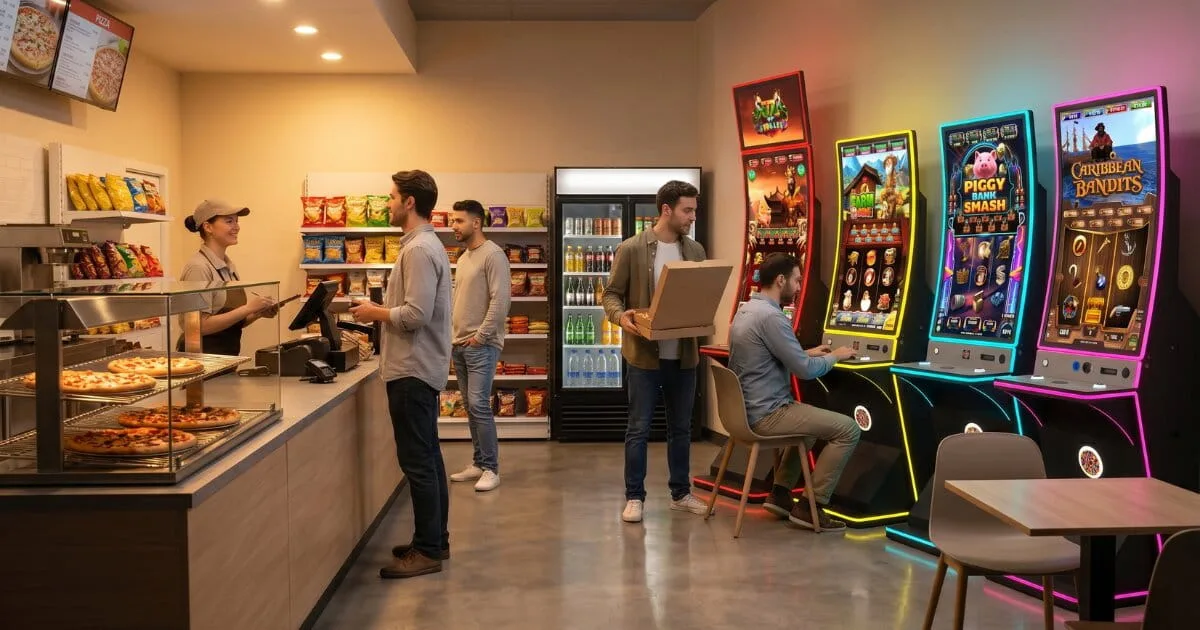
There's also a secondary effect worth noting: stores that install skill game machines often see longer customer dwell times, since players linger to play another round. Longer in-store time can lead to incidental purchases (snacks, drinks, or other items), sometimes called a "halo effect." This is a real and commonly cited dynamic in the amusement industry, though the actual size of the effect will vary by store and customer base.
Is a Skill Game Machine Right for Your Business?
Many owners ask this. Is it worth it? The short answer is yes, for most cases.
If you are wondering how profitable are skill game machines in stores, the numbers show strong returns. These machines bring both direct and indirect income. And they don't require daily effort.
Best Business Types For Skill Game Machines
- Convenience stores with steady daily traffic and repeat customers
- Gas stations where customers wait and look for quick activities
- Restaurants where people spend time and enjoy games
- Truck stops where longer stays increase play time
- Liquor stores where regular visits are common
These locations work well, no doubt. That's why skill gaming machines for gas stations and skill game machines for convenience stores are growing fast.
When Common Revenue Streams Still Make Sense?
- ATM machines are useful in areas where cash transactions are frequent
- Vending machines work well in places with fixed customer groups
- Lottery adds small income without high setup cost
These options help, sure. But they still fall behind skill game machines ROI for small businesses in most situations.
Questions To Ask Before Getting Started
- Check local rules to ensure skill gaming is allowed in your area
- Measure available space to place the machine without affecting store flow
- Understand revenue share terms to estimate real earnings
- Confirm support and maintenance responsibility before installation
These steps matter, right? This can help you plan better and understand skill game machines ROI for small businesses clearly.
Real Profit Potential and ROI Breakdown
Let's talk about results. This is what matters most, right? A single machine can see strong player activity each month, especially in busy locations. High-traffic venues often experience even better performance and engagement.
Compared to many traditional entertainment or convenience-based options, skill game machines can provide stronger player participation and repeat visits. That's one reason many store owners are adding them to their locations.
The setup cost can often be recovered within a relatively short period, making it easier for businesses to expand their machine footprint and add more locations over time. The combination of player engagement, operational simplicity, and scalability makes skill game machines an attractive long-term business addition.
Read More Blogs
- Skill Game Machines: Complete Guide for Business Owners, Arcades, and Operators
- Skill Games and Small Businesses: How Independent Operators Are Driving Real Growth?
- Skill Games vs Slot Machines: The Shift in Gaming Industry Trends
- How Skill Machines Turn Gas Station Visitors Into In-Store Sales
Skill Gaming Machines vs Retail Income Final Verdict
When you compare skill gaming machines vs retail income, the result is clear. Skill games offer better returns, more engagement, and better use of space.
They are not just machines. They are a full revenue system. They increase traffic, boost spending, and create repeat customers.
If you are looking for best revenue streams for convenience stores, skill games are one of the strongest options available today. Simple setup, steady income, and long-term growth. Hard to ignore, right? If you're serious about increasing store income, now is a good time to act.
With solutions from RedPlum Games, you get reliable machines, flexible game options, and support that keeps things running smooth. No stress, no confusion, just results.
So why wait? Contact us today and see how much more your business can earn.
FAQs
1. What businesses benefit most from skill game machines?
Convenience stores, gas stations, bars, restaurants, truck stops, and liquor stores often see the best results because they already have steady customer traffic and repeat visitors.
2. What should I consider before installing a skill game machine?
Check local regulations, available floor space, revenue-sharing terms, and support options. Understanding these factors helps determine whether a machine is a good fit for your location.
3. How do skill game machines compare to vending machines?
Skill game machines typically require less inventory management than vending machines. They can also increase customer dwell time, helping create additional in-store sales opportunities.
4. Are skill game machines a passive revenue source?
Skill game machines are considered a low-maintenance revenue source. After installation, they can operate independently while generating income from regular player activity.
5. Why choose RedPlum Games skill game machines?
RedPlum Games offers flexible game themes, reliable hardware, ticket redemption solutions, and management tools that help operators run locations more efficiently.
Related product
Solaris Game Cabinets
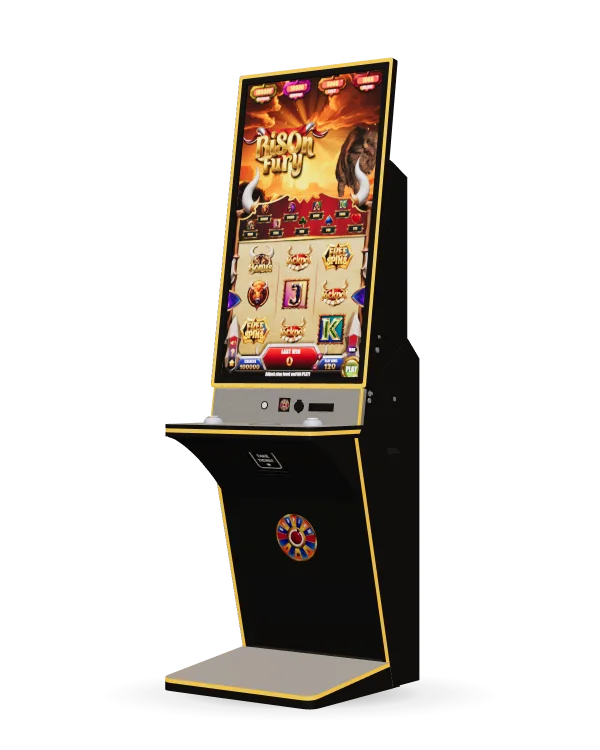
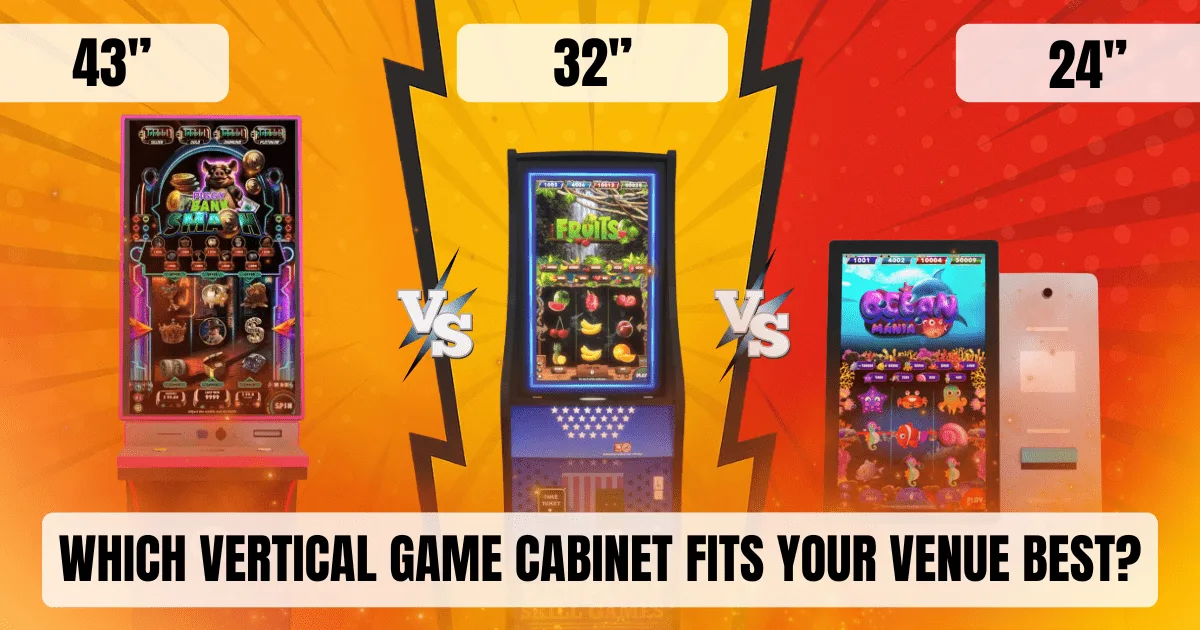
A 43-inch touchscreen in a cold-rolled steel body, with a curved, flat or J-panel display. Every cabinet runs the RedPlum game library and prints encrypted tickets your kiosks pay out.
Explore skill game machines