
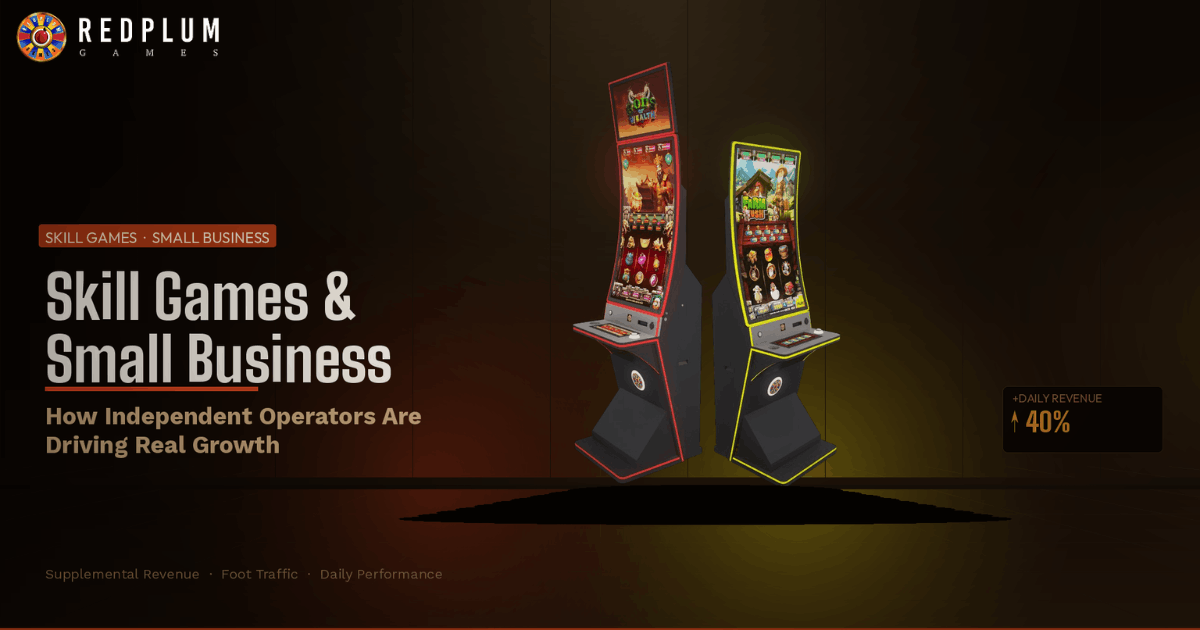
Independent retailers across the United States are looking for smarter ways to grow. Product margins are tight. Foot traffic can be unpredictable. That is why many owners are turning toward skill games for small business growth strategies. These machines do more than sit in a corner. They create activity, repeat visits, and steady supplemental revenue skill games can bring over time. If you are thinking about adding skill games to my business, this guide explains how operators make it work and what truly drives long term results.
Why Skill Games Are Growing in Small Businesses?
Skill games are growing fast across the United States. Many local stores now use them to support daily growth. Rising rent, tight margins, and slow product turnover have pushed owners to look for new options. That is where skill games small business growth becomes real. These machines turn empty floor space into active growing space. Simple as that.
Small businesses adopt them for clear reasons:
- Low space requirement
- Steady player traffic
- Extra footfall inside the store
- Supplemental revenue skill games can generate daily
Instead of waiting for product sales, stores create small entertainment zones. The shift is clear. Retail is no longer passive. Owners are moving toward revenue centers inside their own shops. Pretty smart move, right?
In short, skill gaming continues to rise because it brings steady growth, higher dwell time, and practical growth for independent operators across the country.
Small Stores Where Skill Games Are Commonly Used
Across the U.S., many small shops are seeing real gains. Skill games are not limited to large venues. Local operators are proving that this model works in everyday retail spaces. You see it more and more.
- Gas stations use one or two machines near the counter. Players often stop in for fuel, then stay to play. A store in PA reported steady evening traffic after adding skill games to my business plan. Sales inside the store also went up. Not bad at all.
- Convenience stores place machines near snack aisles or side walls. One owner shared that repeat visits increased within weeks. That is how skill game operator success stories start.
- Liquor stores and taverns use them to extend guest stay time.
- Smoke shops use them to boost supplemental revenue skill games bring daily.
Different stores. Same result. Extra income that supports steady growth.
Understanding the Revenue Model for Skill Game Operators
Many owners ask one thing. Is skill gaming profitable? The answer depends on traffic, placement, and payout setup. Still, the model is simple to understand.
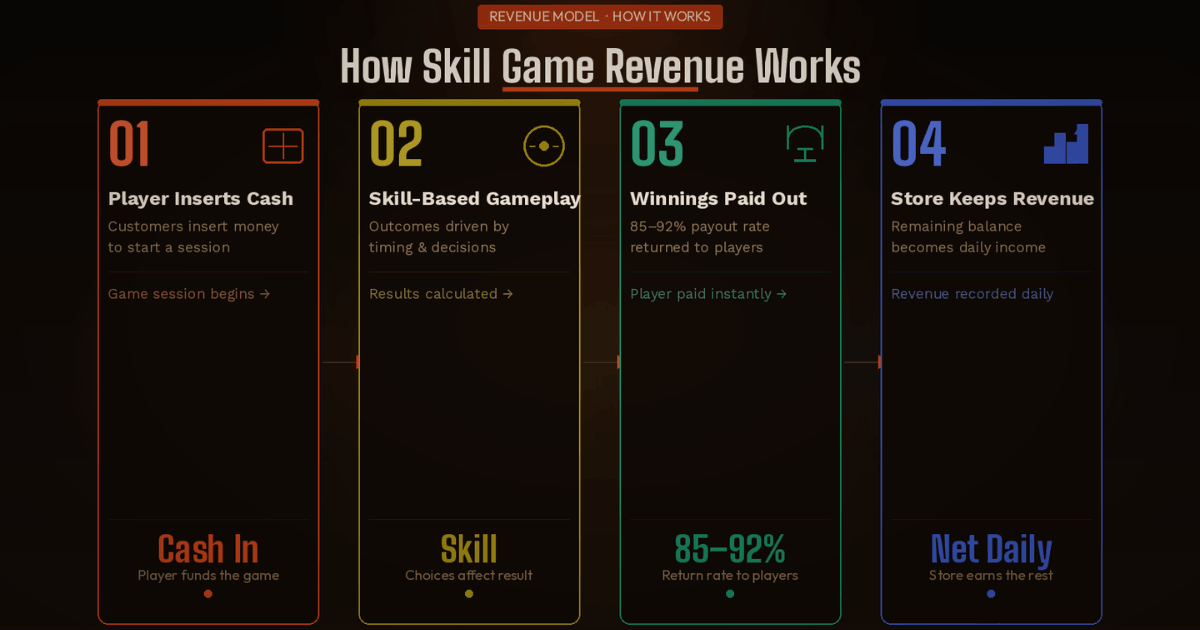
Here is how it works:
- Players insert cash to play
- The game runs on skill-based outcomes
- Winnings are paid based on preset payout rates
- The remaining balance becomes store revenue
Most machines are set to return a large portion to players over time. A payout rate between 85% and 92% is common in many areas. Sounds straightforward, right?
Average daily play can vary widely depending on location and foot traffic. In steady stores with consistent customer flow, skill machines often generate regular daily activity that builds up over time. Strong visibility and repeat players make a noticeable difference. In stronger areas, it may go higher. Even slow days bring activity. It adds up faster than many expect.
A realistic monthly earning range per machine can be pretty solid in some locations. That steady flow supports skill games for small business growth and makes supplemental revenue skill games a practical growth source.
Startup Cost vs Profit Math
Before adding skill games to my business, most owners want clear numbers. Fair enough. Let’s break it down in plain terms.
- Machine cost range
- New units often fall within a moderate investment range, depending on cabinet size and software package
- Revenue share models may reduce upfront cost
- Some distributors offer placement deals
Cost depends on cabinet size and software package. Dual screen models usually cost more. Still, many operators start small. Smart move.
- Placement requirements
- 3 to 4 feet of floor space
- Standard power outlet
- Clear visibility from cashier
- Not blocking aisles
Simple setup. Nothing fancy.
- Break-even estimate
If a machine performs steadily each month and the store keeps a fair share of the revenue, the initial investment can be recovered within a reasonable period. In many cases, operators see payback within the first year when placement and traffic are strong. That steady return supports skill games small business growth and gives owners clearer confidence when asking, is skill gaming profitable.
Why Skill Games Beat Traditional Slot-Style Gameplay
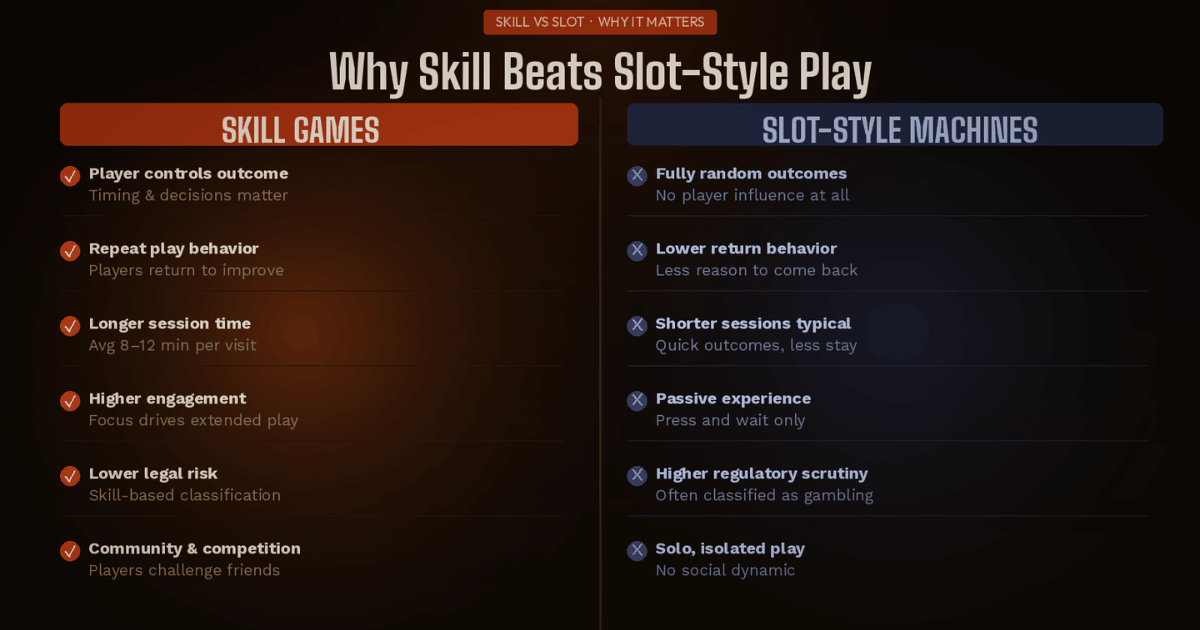
Skill games stand apart because players feel in control. Outcomes are based on timing, pattern recognition, or decision making. It is not just press and wait. That sense of control matters a lot. People enjoy knowing their choices affect the result. Pretty simple, right?
With slot-style machines, outcomes are fully random. In skill games, players believe they can improve. That belief drives repeat play behavior. Many come back to beat their last score. Some even compete with friends. That is how skill game operator success stories often begin.
Longer session time is common because players stay focused. They adjust strategy. They try again. It keeps them engaged.
There is also lower legal risk perception in many regions since games rely on skill elements. For store owners focused on skill games small business growth, this difference plays a big role in steady, long-term demand.
Game Rotation Strategy That Maintains Player Interest
Keeping the same games all year can slow play. Players get used to patterns. Interest drops. That is why rotation matters. A simple monthly theme change keeps things fresh and active. It does not need to be complex. Just steady updates.
Smart operators often:
- Rotate 2 to 3 titles every 30 days
- Track which themes work
- Remove low performing games
- Reintroduce popular titles later
Using player feedback helps a lot. Ask regulars what they enjoy. Watch which games stay busy. Listen to simple comments like “this one pays better” or “that one is boring.” Real talk gives real direction.
Theme fatigue is real. If players see the same screen every visit, excitement fades. Seasonal swaps fix that. Sports themes during playoffs. Holiday themes in winter. Summer vibes in warm months.
These small changes support supplemental revenue skill games bring. Fresh content keeps replay strong. Keeps traffic steady. Works well.
Common Skill Game Operator Mistakes
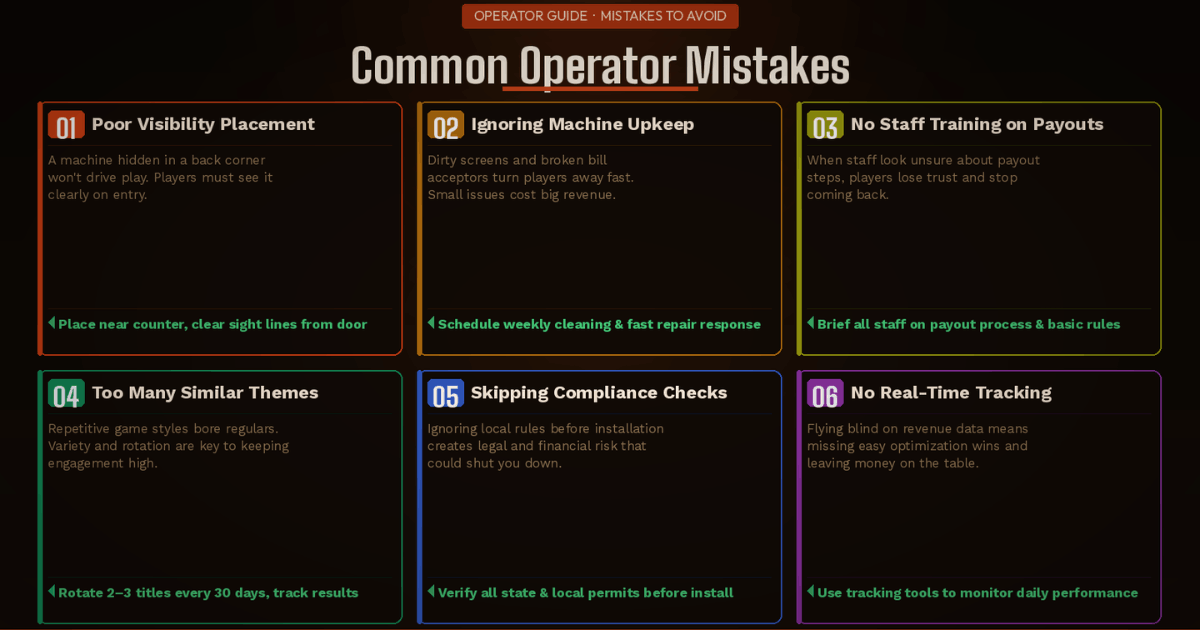
Many operators start strong but lose momentum due to simple errors. These mistakes are easy to fix. Still, they hurt revenue if ignored.
- Poor visibility placement is common. A machine hidden in a back corner will not work well. Players need to see it right away. Clear sight lines from the counter help. If customers do not notice it, they will not play. Plain and simple.
- Ignoring machine upkeep also slows growth. Dirty screens, broken bill acceptors, or slow response times turn people away. Small issues should be fixed fast. Regular cleaning keeps machines inviting.
- Not training staff on payouts creates confusion. Employees must understand basic payout steps and rules. When staff look unsure, players lose trust. Quick answers build confidence.
- Running too many similar themes can bore regulars. Variety matters. Mix visuals and styles. Rotate wisely.
Avoiding these mistakes supports skill games small business growth and keeps revenue steady over time.
How RedPlum Supports Skill Game Operators?
Choosing the right partner matters. That is where RedPlum Games supports store owners in practical ways. The focus is simple. Give operators tools that help income grow and stay steady.
Their software lineup offers flexibility. Prime, Xtreme, Xtreme2, and Horizon themes give stores different styles and formats. Owners can match game types to player demand. Some locations prefer classic fruit themes. Others want bold graphics. Options matter. No guesswork.
The 43 inch dual screen cabinet is built for shared play and clear visibility. It fits well in gas stations, convenience and liquor stores. The screen size draws attention fast. That helps drive play.
Switch It Up lets stores choose which games appear on the machine. Operators control the mix based on performance. If one theme slows down, it can be replaced. Simple change. Real impact.
Recall Rewards gives players a preview feature tied to settings. That keeps interest high.
RedPlum Connect tracking tools allow owners to monitor performance in real time. Data is clear. Decisions become easier. For those asking is skill gaming profitable, strong tracking and flexible software make a real difference.
When Skill Games Are Not Ideal
- Skill games work well in many stores. Still, they are not perfect for every location. Being honest about this builds trust.
- If foot traffic is very low, machines may sit idle for sometime until customers notice. No players means no growth. It is that simple.
- Limited floor space can also be a problem. Crowded aisles reduce comfort. Players need room to stand and focus.
- Regulatory uncertainty is another concern. If local rules are unclear, it is better to pause and verify before investing.
- No staff oversight creates risk. Machines need monitoring and basic support.
- For steady supplemental revenue skill games, the right setting truly matters.
2026 Trends for Independent Operators
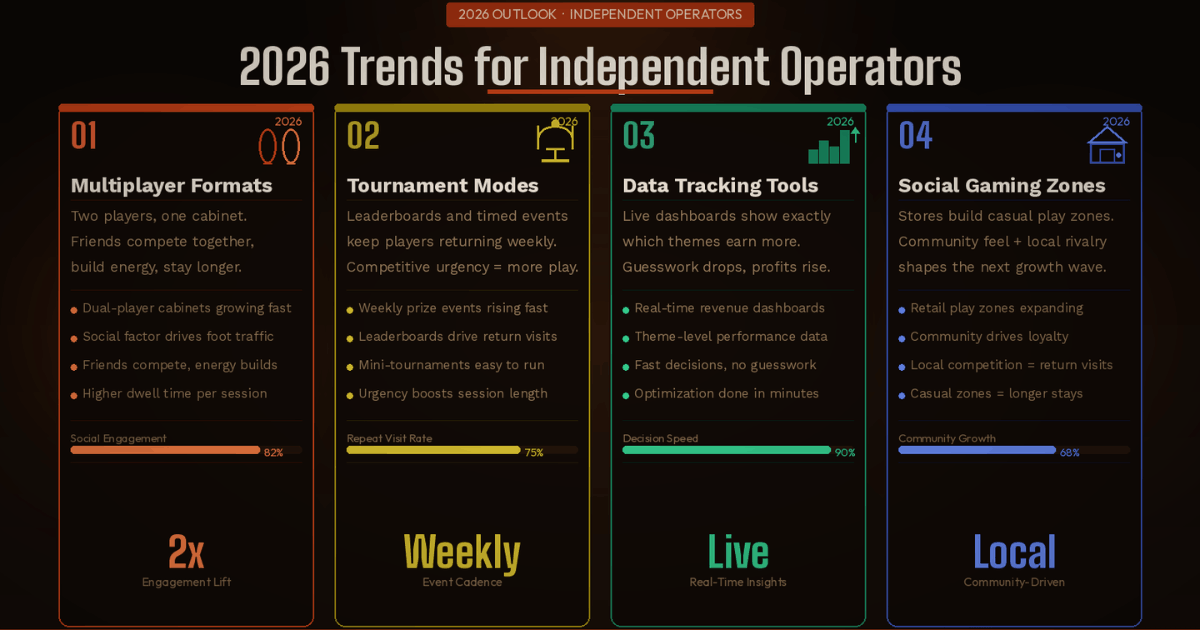
Independent operators are watching new patterns closely. Player behavior is shifting. Stores that adjust early often see better results.
- Multiplayer formats are gaining attention. Two players on one cabinet create friendly competition. People bring friends. They challenge each other. Energy builds fast. That social factor supports skill games and small business growth in busy locations.
- Tournament modes are also rising. Timed contests and leaderboard prizes keep players coming back. Weekly mini events can boost repeat visits. It keeps things lively. No one wants to miss out.
- Data tracking tools help owners make smarter decisions. Real time performance reports show which themes earn more. Adjustments can be made quickly. Guesswork drops. Profits become easier to track.
- Social gaming formats inside retail are expanding too. Stores are creating small play zones. It feels casual. It feels local. That mix of competition and community is shaping the next wave of skill game operator success stories.
Relate Content
Skill Games vs Slot Machines – The Shift in Gaming Industry Trends
Which Vertical Game Cabinet Fits Your Venue Best?: 43″ vs. 32″ vs. 24″
Final Takeaways for Store Owners
Skill games can create steady, recurring growth when placed correctly. Many owners see consistent weekly cash flow once traffic builds. That is why skill games small business growth continues across many states.
Placement matters. Clear visibility and smart floor layout improve play rates. Rotation matters too. Fresh themes keep regular players engaged and coming back.
Choose reliable suppliers with strong support tools and tracking systems. If you are considering adding skill games to my business plan, request a demo and review real numbers before making your decision.