
Multigame skill game machines are now common in many U.S. retail locations. You may have seen them in convenience stores, truck stops, gas stations, or local gaming rooms. They look simple on the outside, but inside they run advanced gaming software built around player skill.
These machines are not based on random luck alone. Player timing, choices, and focus matter a lot. That is the main reason many operators prefer them today.
A Multigame Skill Game Machine is designed to deliver interactive gameplay inside a secure gaming cabinet hardware system. Unlike traditional arcade-only units, these are built for regulated retail environments in the United States. They combine skill based gaming system logic with secure payout integration, making them suitable for commercial use.
Many business owners are searching for a Multigame Skill Game Machine to something reliable, compliant, and profitable. That is exactly where modern multi game skill machine technology comes in.
What Is a Multigame Skill Game Machine?
A multigame skill game machine is a single gaming cabinet that offers several skill-based games in one unit. Players select from different games on a touchscreen display. Each game rewards performance, not pure chance.
In simple terms, one cabinet holds many games. That saves space and gives more options. Pretty handy, right?
Unlike traditional slot-style machines, outcomes are influenced by player decisions. Pattern recognition, reaction speed, and accuracy affect the final result. In many states, this skill element plays a key role in legal classification.
According to data from the American Gaming Association, the U.S. commercial gaming industry generated over $60 billion in annual revenue in recent years. Skill-driven formats continue to gain attention as operators look for interactive alternatives.
In today’s market, skill game machines USA operators install are often categorized as skill based arcade machines rather than traditional slot devices. The difference lies in how player input timing affects the result. The stronger the player decision timing, the better the potential outcome.
When people ask, “How does a multigame skill game machine work?” the answer always comes back to this core idea. The player has influence. That is the key.
Key Features of Multigame Skill Machines
These machines are built to support multiple game titles in one system. They are designed for steady use in retail and gaming environments. The hardware must be strong and secure.
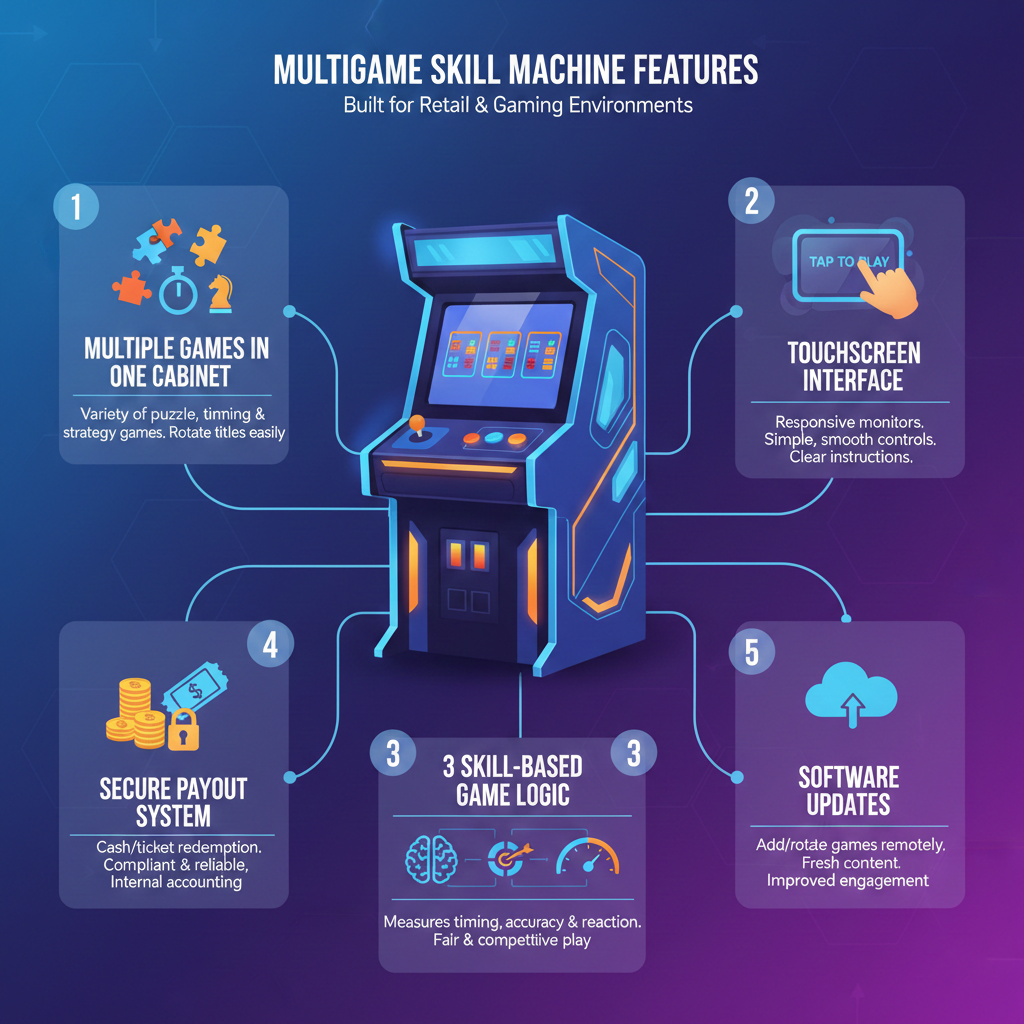
Here are the main features you will find:
1. Multiple Games in One Cabinet
Players can choose from puzzle games, timing challenges, and strategy-based games. This variety keeps things fresh. No one gets bored too quickly.
A multi game skill machine allows operators to rotate titles without replacing hardware. That means lower overhead and more flexibility. It also supports interactive arcade technology that keeps players engaged.
2. Touchscreen Interface
Modern cabinets use responsive touchscreen monitors. Players tap, select, and control gameplay directly on the screen. It feels simple and smooth.
Touchscreen skill games are easier for new players to understand. Instructions are shown clearly. Feedback is instant. That quick response keeps the flow natural.
3. Skill-Based Game Logic
The system tracks player input. Timing and accuracy are measured. Results are calculated using programmed logic tied to performance.
This is where cognitive timing skills and attention and reaction time come into play. Players who react faster or make smarter choices often perform better. That makes the experience feel fair and competitive.
4. Secure Payout System
Machines include internal payout systems. These may support cash or ticket redemption, depending on local rules.
Payout system integration must meet compliance standards. A reliable coin operated skill machine will include secure cash handling and internal accounting systems.
5. Software Updates
Game libraries can be updated. Operators can add or rotate games through system updates to keep players engaged.
This supports retail gaming revenue growth because repeat players see fresh content. When game feedback systems are improved, engagement increases.
How a Multigame Skill Game Machine Works?
At first glance, it looks like any arcade-style cabinet. But inside, several systems work together. Let’s break it down step by step.
Step 1: Player Selection
The player inserts money and chooses a game from the menu. Each game has clear instructions on the screen.
Many operators installing a multigame skill game machine for sale in USA locations report that ease of game selection increases participation. If the interface is confusing, players walk away. If it is simple, they stay.
Step 2: Skill Interaction
The player interacts through touch or buttons. Timing, pattern selection, and quick decisions are required. The machine records each action.
This is where player decision timing becomes critical. The system tracks milliseconds in some formats. Even slight variations in attention and reaction time can change the result.
Step 3: Game Evaluation
The internal processor evaluates performance. Scores are calculated using predefined logic. In many cases, results are partly influenced by player timing.
Game based learning time skills are visible here. Some titles reward players who understand pacing and rhythm. Learning time perception through arcade games becomes part of the fun.
Step 4: Payout Calculation
If performance meets reward criteria, the payout is calculated. The system processes this instantly.
Retail gaming revenue depends on transparent payout rules. A skill gaming cabinet must balance entertainment and profitability carefully.
Step 5: Redemption
Players receive tickets or cash credits based on configuration. Simple process, no fuss.
Below is a simplified system overview:
Component | Function |
Touchscreen Display | Player interaction |
Game Software Engine | Processes logic |
Internal Processor | Calculates results |
Payout System | Handles rewards |
Secure Cabinet | Protects hardware |
Each component works together to deliver consistent performance. Without stable gaming cabinet hardware, the system would fail. That is why quality matters.
Skill vs Chance: What Sets It Apart?
This is where things get interesting. Skill games rely on player input. Chance-based machines rely mainly on random number generators.
In skill gaming:
- Player decision timing matters
- Reaction speed affects outcome
- Pattern recognition improves results
- Strategy influences performance
In chance-based gaming:
- Results are mostly random
- Player action has limited effect
The role of timing in skill based gameplay cannot be ignored. Players who understand rhythm often perform better. This makes the system feel interactive rather than passive.
Types of Games Included in Machines
A multigame skill game machine usually includes several categories. This keeps the experience varied.
Common game types include:
- Puzzle-Based Games: Players solve visual puzzles within a time limit. Accuracy boosts rewards.
- Matching Games: Matching symbols or patterns quickly can increase payout chances.
- Timing Challenges: Pressing or selecting at the right moment affects the result. A split second can matter.
- Strategy Mini Games: Players make choices that impact scoring outcomes. Smart moves help.
Because multiple formats are offered in one cabinet, engagement tends to stay higher. More variety means more replay value.
Learning time awareness through interactive learning games is often part of these formats. Over time, players improve cognitive timing skills naturally.
Where Multigame Skill Machines Are Used?
These machines are commonly placed in small to mid-sized business locations. Space efficiency matters. A single cabinet serving multiple games helps a lot.
Typical locations include:
- Convenience stores
- Truck stops
- Gas stations
- Liquor store and lounges
- Small gaming rooms
- Local entertainment centers
According to U.S. small business retail data published by the U.S. Small Business Administration, convenience and small retail stores remain strong contributors to local economies.
For owners searching “Best multigame skill game machine for stores,” placement plays a big role in performance. High visibility often increases player interaction.
Benefits for Business Owners and Operators
For operators, the appeal is clear. These machines provide additional revenue without major floor renovation. That sounds pretty good, right?
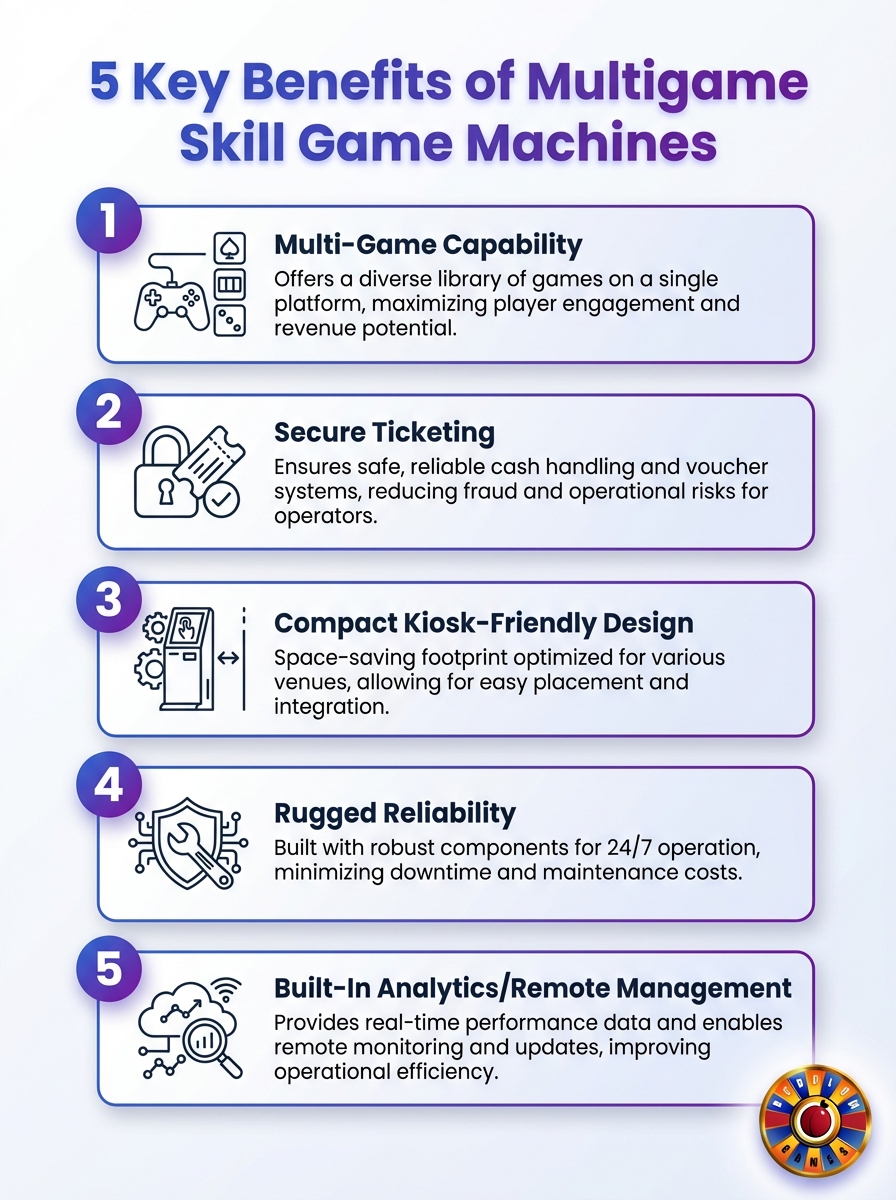
Here are the main benefits:
- Increased Player Engagement: Multiple games encourage longer play sessions. Arcade skill games learning patterns keep players returning.
- Space Efficiency: One cabinet replaces several single-game machines. That makes floor planning easier.
- Flexible Game Library: Software updates allow game rotation. Fresh content keeps interest alive.
- Revenue Potential: Revenue is generated through consistent play. Operators who buy multigame skill machine units often report steady earnings when placed correctly.
- Data Monitoring Options: Modern systems may include remote performance tracking. Retail gaming revenue trends can be monitored across locations.
Why Choose RedPlum Games Solutions?
RedPlum Games develops skill-focused gaming cabinets built for U.S. operators. The machines are designed for retail use and steady performance.
Game software supports interactive arcade technology and optimized player input timing. Hardware is assembled for durability and long operating hours.
For operators searching to buy multigame skill machine systems, reliability matters. Ongoing support reduces downtime. Stable systems protect revenue.
Related Contents:
How Skill Machines Turn Gas Station Visitors Into In-Store Sales
Which Vertical Game Cabinet Fits Your Venue Best?: 43″ vs. 32″ vs. 24″
Skill Games vs Slot Machines – The Shift in Gaming Industry Trends
Final Thoughts on Multigame Skill Game Machines
A multigame skill game machine combines multiple interactive games into one secure cabinet. Outcomes are influenced by player timing and decisions. That key difference separates it from traditional chance-based systems.
For U.S. business owners, RedPlum Games‘ machines can provide added revenue while using limited floor space. With proper compliance checks and good placement, they can become a steady source of income.
If you are considering a Multigame Skill Game Machine for your location, focus on software quality, cabinet durability, and ongoing support. Choosing the right provider makes the process smoother and more reliable.
Skill gaming is simple in concept but powerful in execution. And when done right, it works pretty well for both players and operators.